
Overview
What is Laser Mole Removal and who is it for?
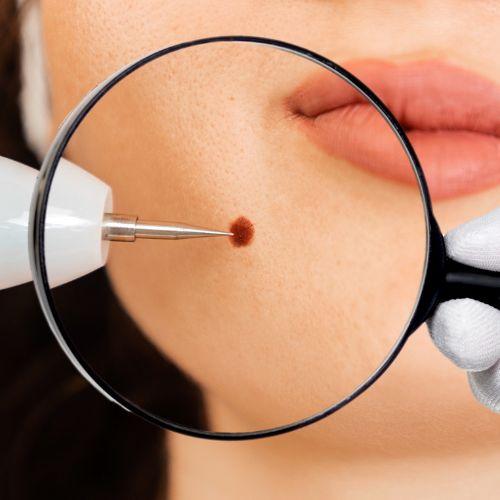
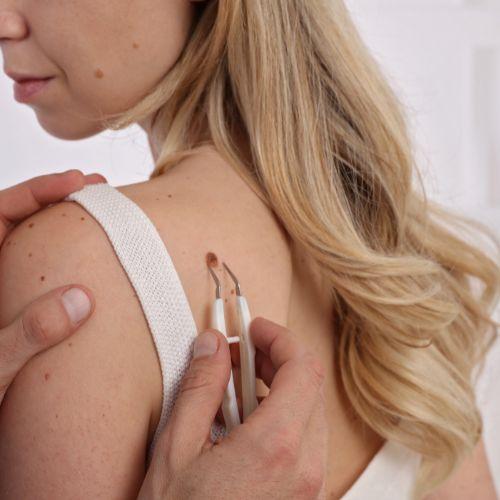
Moles are clusters of pigment cells. Most are harmless, but a small number can change into skin cancer, so the first step is always a careful examination. Dr. Shilpa looks at the size, shape, colour, borders and any recent change, often with a dermatoscope. A mole that looks unusual, has grown or changed, bleeds or itches is not treated with laser under any circumstances.
Suspicious moles are removed surgically and the tissue is sent to a laboratory for testing. This matters because laser vaporises the tissue, leaving nothing to examine. For moles that look clearly benign, a laser such as a CO2 laser can remove them layer by layer with fine control, usually leaving a small pink mark that fades over the following weeks and months.
In Indian skin, the treated spot can heal slightly darker or lighter than the skin around it for a few months. Deeper moles may also leave a small dent or partly return, which sometimes needs a second sitting. Dr. Shilpa will tell you honestly whether laser, radiofrequency or surgical excision is the better choice for each mole, and why, before anything is done.
The procedure
What happens during the treatment?
- 1
Mole examination
Each mole is checked with a dermatoscope. Any mole with worrying features is planned for excision and laboratory testing instead of laser.
- 2
Local anaesthesia
Numbing cream or a small local anaesthetic injection is used so you do not feel pain during removal.
- 3
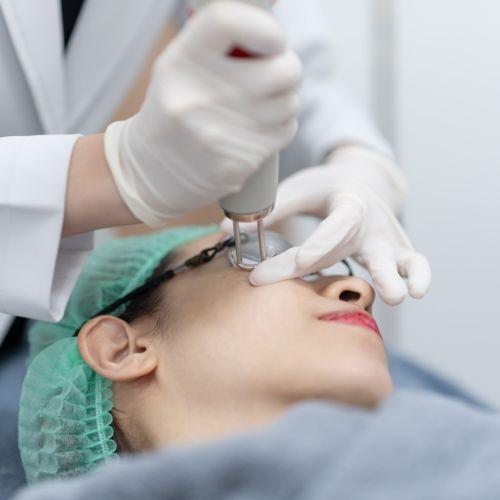
Laser removal
With eye protection on, the mole is removed in fine layers until it is level with the skin. Most moles take only a few minutes.
- 4
Dressing and healing
An antibiotic ointment is applied. A small scab forms and falls off in about a week, leaving pink skin that settles over weeks.
Benefits
What are the benefits?
- Each mole is examined before treatment, with suspicious ones sent for testing.
- Small benign moles are removed in a single short visit.
- Fine control helps keep the treated mark small.
- No stitches are needed for most small laser removals.
- Several small moles can often be treated in one sitting.
Is it right for you?
Laser mole removal suits small moles that look benign on examination. It is not used for moles that are large, irregular, changing, bleeding or otherwise suspicious, which are excised and sent for testing. It is also postponed during pregnancy or active infection. If you scar easily or form keloids, tell Dr. Shilpa beforehand.
Aftercare
How should you care for your skin afterwards?
- 01Apply the prescribed ointment twice a day until the scab falls off.
- 02Keep the area clean and dry for the first 24 hours.
- 03Do not pick the scab; let it come off naturally.
- 04Use sunscreen on the healed spot daily for at least 3 months.
- 05Show the clinic any mole that regrows or changes later.
FAQs
Frequently asked questions
It is safe for small moles that have been examined and look benign. The key safety step is the check before treatment. Moles with any worrying sign are not lasered. They are removed surgically and sent for testing, so nothing important is missed.
This page is for general information and does not replace a medical consultation. Results vary from person to person.