
Overview
What is Mole Surgery and who is it for?
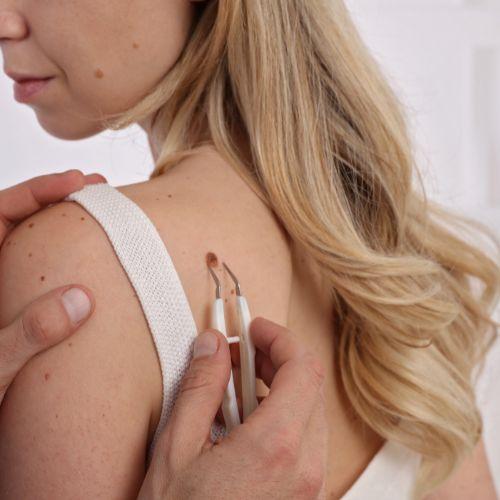
A mole, or naevus, is a cluster of pigment cells in the skin. Moles can be flat or raised, brown or skin-coloured, and many people have several. Most are harmless and stay the same for years. People usually seek removal because a mole is on the face, gets irritated by shaving or jewellery, or simply bothers them. A mole that grows, bleeds, itches or changes colour should always be examined.
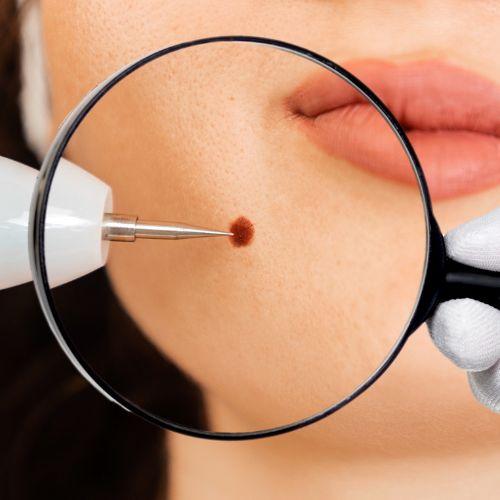
There are two main ways to remove a mole. A radiofrequency shave removes raised moles level with the skin and usually heals without stitches. Surgical excision cuts out the whole mole with a small margin and closes the skin with fine stitches. Excision is preferred when a mole is deep, flat or needs to be sent to a laboratory for histopathology.
Before removal, Dr. Shilpa examines the mole, often with a dermatoscope, to check for warning signs. Every removal leaves some kind of mark, so the method is chosen to balance the look of the final scar with the need for complete removal. Healing depends on the site, your skin type and aftercare. Dr. Shilpa will explain the likely result for your mole before you decide.
The procedure
What happens during the treatment?
- 1
Mole examination
Dr. Shilpa looks at the mole closely, asks about any changes and decides on the safest removal method.
- 2
Local anaesthesia
The area is cleaned and numbed with a small injection, so you stay awake but comfortable.
- 3
Removal
The mole is removed by radiofrequency shave or surgical excision. Excision wounds are closed with fine stitches.
- 4
Dressing and follow-up
A dressing is applied. Stitches, if any, are removed in 5-10 days, and lab results are discussed if a sample was sent.
Benefits
What are the benefits?
- Moles are examined for warning signs before removal.
- The method is chosen to suit the mole's depth and location.
- Performed under local anaesthesia as a short day procedure.
- Removed tissue can be sent for laboratory testing when needed.
- Careful closure and aftercare help the scar settle well.
Is it right for you?
Mole surgery suits adults and older children with moles that are bothersome, cosmetically unwanted or need testing. Tell Dr. Shilpa if you take blood thinners, have diabetes, a bleeding disorder or a history of keloids. Moles with worrying features are prioritised for excision and laboratory examination.
Aftercare
How should you care for your skin afterwards?
- 01Keep the dressing dry for the first 24-48 hours.
- 02Apply the prescribed ointment and change the dressing as advised.
- 03Avoid heavy exercise and stretching the area while stitches are in.
- 04Do not pick at scabs, and protect the healed area with sunscreen.
- 05Return for stitch removal and lab results on the given date.
- 06Report any redness, swelling, discharge or fever promptly.
FAQs
Frequently asked questions
The area is numbed with a local anaesthetic injection, which stings briefly. After that, you may feel pressure but not pain. Mild soreness for a day or two afterwards is common and usually settles with simple painkillers.
This page is for general information and does not replace a medical consultation. Results vary from person to person.